Experience Design Capability – Making design easier to access, use and scale
AstraZeneca · 2022–2024
Experience strategy · Organisational capability · Research & insight · Design governance
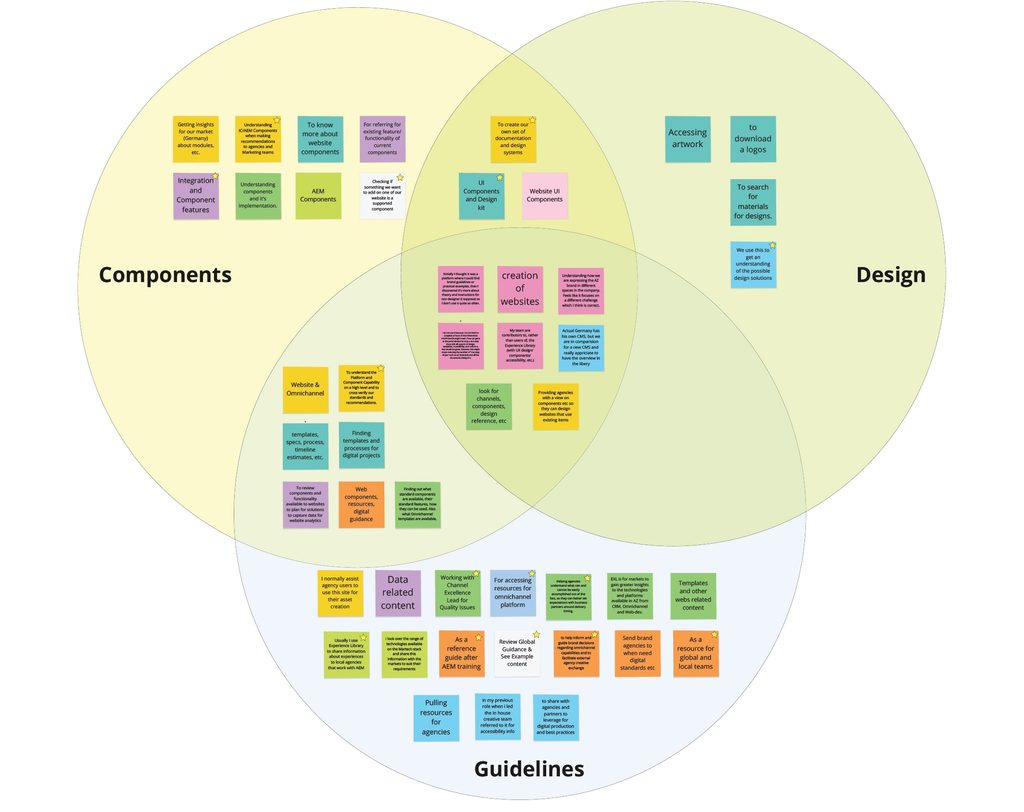
I was asked to lead the development of a global Experience Design capability strategy, exploring how design expertise, shared standards, guidance, tools and ways of working could operate as a more connected organisational capability.
Working across multiple therapeutic areas, markets and business functions, I focused on helping teams understand what design support they needed, where to find it and how to deliver consistent, high-quality digital experiences.
Key outputs
- Cross-organisational research – Interviews with designers and stakeholders across regions, business units and functions
- 300 users surveyed – 25% response rate, followed by 10 in-depth interviews
- Capability ecosystem – Assessment of internal, embedded and external design resources
- 29 components identified – For updates or additions to the Experience Library
Understanding the challenges
Following an organisational restructure, the focus shifted from centralised design delivery towards enabling distributed teams through shared standards, governance, guidance and access to specialist expertise.
I interviewed designers and stakeholders across regions, therapeutic areas and business functions, identifying recurring challenges including reactive briefs, fragmented workflows, limited access to user research and inconsistent collaboration.
The findings highlighted the need for clearer routes to design expertise, shared principles and standards, and more effective ways to exchange knowledge and best practice.
Connecting the capability ecosystem
I mapped how teams accessed design expertise through internal designers, embedded resources, freelancers and agencies, exploring where responsibilities, guidance and routes to support were unclear.
This included engaging Procurement to understand existing design partners and identify opportunities for specialist support, and Capability teams to explore available Experience Design and Design Thinking education. I also worked with stakeholders responsible for the underlying digital platforms and the resources provided to markets and external agencies.
The aim was to establish a more connected approach to accessing expertise, supporting teams and maintaining experience quality across the organisation.
Evolving the Experience Library
The Experience Library, AstraZeneca’s shared resource for digital guidance, components and design assets, provided an opportunity to put this thinking into practice.
Working with Engineering and key stakeholders responsible for the underlying platform and supporting markets and agencies, I investigated how its AEM components were being used and identified 29 components requiring updates or additions. We also explored stronger governance and the use of Storybook to maintain alignment between technical components and the Figma Design Kit.
To understand user needs, I reviewed usage analytics, facilitated cross-functional workshops and surveyed 300 Experience Library users across regions and business functions, achieving a 25% response rate. Follow-up interviews with 10 users provided deeper insight into how teams accessed and used the resources.
This informed a broader direction for the Experience Library, connecting design assets and technical components with accessibility, content, guidance, governance and communication.
The wider outcome
The work established a clearer understanding of the organisational challenges involved in accessing, coordinating and scaling Experience Design.
It also shaped a more connected approach to design capability, bringing together people, resources, standards and governance to help distributed teams deliver consistent digital experiences.
These principles subsequently informed my leadership of OneAZ, where the same challenges of consistency, flexibility and shared capability emerged at global platform scale.